

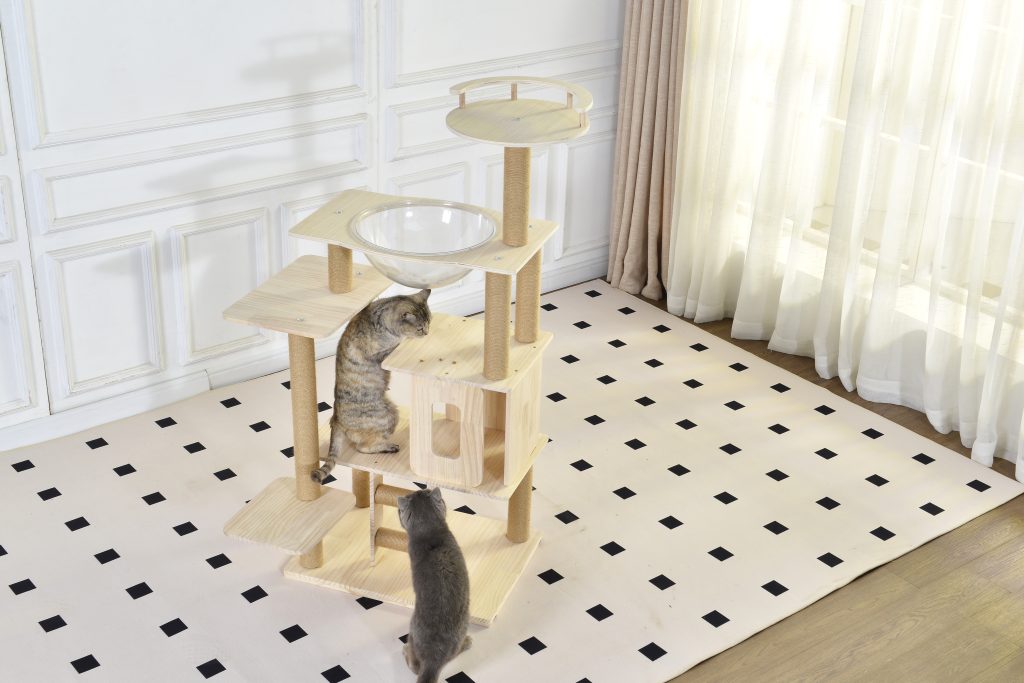
A cat tree is multi-level furniture for cats to climb, scratch and rest. When shopping, prioritize stability, durable materials, and whether the height fits your cat and living space.
Buying Guide to Avoid Common Mistakes
Heavy & Sturdy Base: The base should weigh ≥5kg, with a base diameter ≥30cm and post thickness ≥8cm. This prevents wobbling or tipping when your cat jumps.
Matching Height: 1.2–1.5m for single cats and small apartments; 1.6–1.8m for multi-cat households or large homes. Models taller than 1.5m are recommended to be secured to the wall with expansion bolts to avoid shaking.
Durable Materials: Opt for posts fully wrapped in sisal rope (density ≥2g/cm³). Avoid plush posts that shed fibers. Panel thickness ≥12mm; solid wood or thick steel tubes are more durable than paper tubes.
Proper Platform Spacing: The comfortable jumping range for adult cats is 30–45cm. Gaps that are too big or too small will make cats hesitant to jump.
Skip Wheeled Designs: Wheeled cat trees may slide when cats leap. Instability will make your cat refuse to use it.
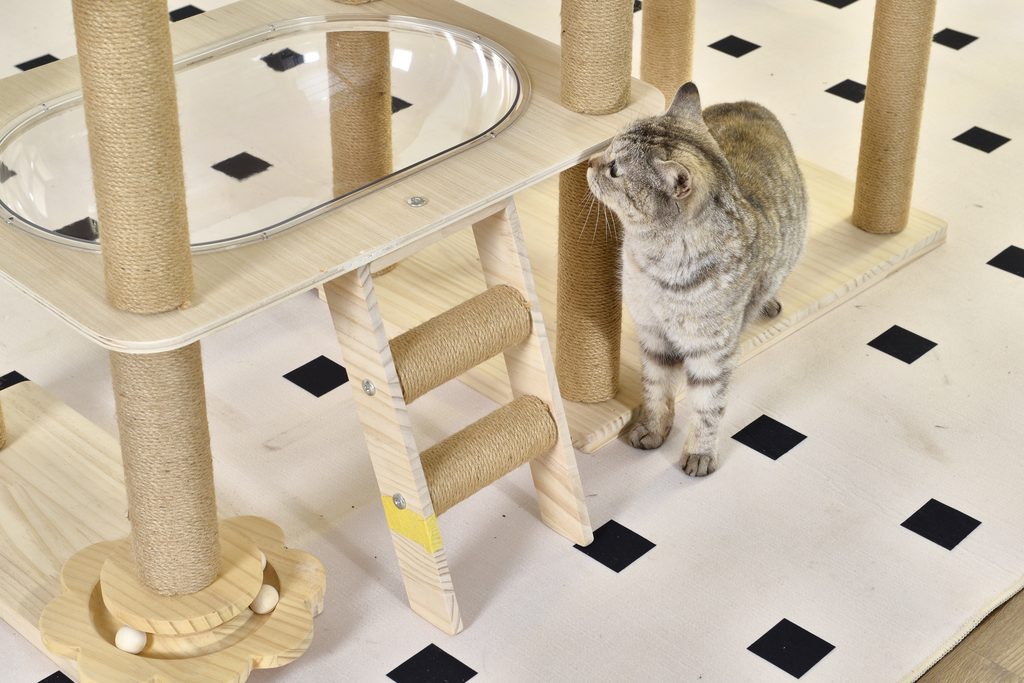
Which Style Works For Your Home
Single Cat & Small Apartment: Compact floor-standing model with enclosed cat condo and sisal posts. Small footprint and great stability.
Multi-Cat / Large Cat Family: Reinforced wide version with base ≥50×70cm and total weight ≥10kg, or wall-mounted structure. Platform diameter ≥35cm.
Senior or Skittish Cats: Low center of gravity (max height ≤1.5m), extra-wide platforms (≥40×40cm). Add ramps to reduce jumping stress.
Space-Saving Option for Small Homes: Wall-mounted or modular units to make use of vertical wall space. No-drill designs are perfect for renters.
发表回复